10 Best Power Banks of 2026, Tried, Tested, Ranked
I tested ten power banks over three months, draining them on flights, recharging laptops in airport lounges, and running multi-device stress tests at my desk. The Anker Nano Power Bank 10,000mAh came out on top. Its built-in USB-C cable, compact size, and 30W fast charging cover phones, earbuds, and tablets without adding noticeable weight to a jacket pocket.
That said, the right pick depends on what you carry. A 5,000mAh might suffice if you rarely drain past 40 percent. A 20,000mAh slab makes sense for laptop travelers. Below, I ranked every power bank by real-world capacity, charging speed, build quality, and portability on a 10-point scale.

- Quick phone recharge: Thirty-watt output pushed an iPhone from zero to fifty percent in about half an hour
- Solid capacity return: Roughly 6,800mAh usable capacity from the rated 10,000mAh across three test cycles
- Pocketable footprint: Smaller than most wallets and light enough at seven ounces to forget it is there
- Durable shell material: Eighty percent post-consumer recycled plastic housing that still feels genuinely solid overall
- Multi-device ports: USB-C and USB-A outputs charge a phone and earbuds at the same time easily
- No-cable convenience: Retractable built-in USB-C cord means you never need to pack a separate charging cable
- No wireless: Lacks magnetic or Qi wireless charging so MagSafe users still need a cable each time
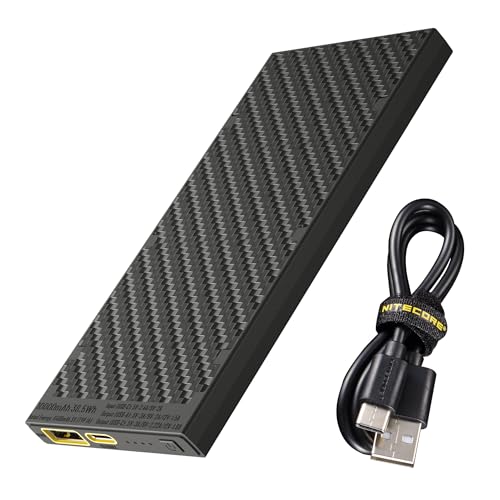
- Quick phone recharge: Twenty-two-watt output is adequate for phones and headlamps on multi-day backcountry trips
- Solid capacity return: Roughly 6,500mAh usable from the rated 10,000mAh which covers about 1.5 full phone charges
- Pocketable footprint: At 5.3 ounces this is lighter than most smartphones and fits a hip belt pocket
- Durable shell material: Aerospace-grade carbon fiber composite frame shrugs off trail drops and pack compression easily
- Multi-device ports: Dual USB-C ports let you charge a phone and a headlamp at the same time
- No-cable convenience: Pass-through charging lets you refill the bank and your phone from one wall outlet
- Lower wattage: Maximum 22.5W output means laptops and tablets charge noticeably slower than faster competitors

- Quick phone recharge: Full 100W output is powerful enough to charge most USB-C laptops at near-full speed
- Solid capacity return: About 8,200mAh usable capacity from a rated 12,000mAh which is strong for this size
- Pocketable footprint: Roughly the size of a small water bottle cap and easy to palm in one
- Durable shell material: Clean plastic housing with an animated TFT robot face that shows charging status clearly
- Multi-device ports: USB-C and USB-A outputs cover virtually every device you might carry in a bag
- Fast capacity drain: Running at full 100W empties the 12,000mAh battery in well under an hour of use
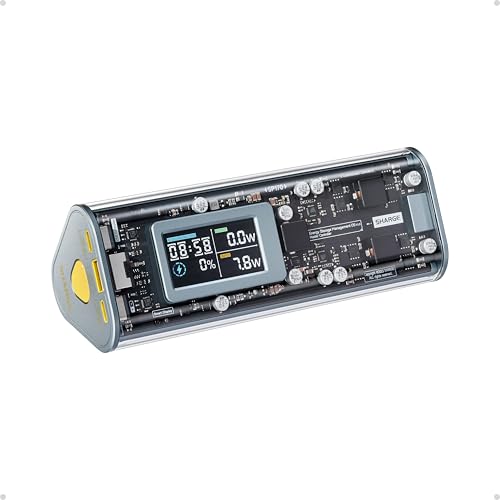
- Quick phone recharge: 140W single-port output charges a 16-inch MacBook Pro at its full native speed
- Solid capacity return: About 16,500mAh usable from 24,000mAh rated which provides four full phone charges roughly
- Pocketable footprint: Larger than pocket-sized but manageable in a daypack or messenger bag side pocket comfortably
- Durable shell material: IP66-rated transparent shell is sealed against dust and water jets far beyond most competitors
- Multi-device ports: Two USB-C and one USB-A port handle three devices simultaneously with smart power sharing
- Heavy at 1.5 lbs: Weighs more than double most 10,000mAh banks making it impractical for everyday pocket carry

- Quick phone recharge: 100W USB-C output handles most laptops at their full charging speed without throttling noticeably
- Solid capacity return: Roughly 13,800mAh usable from 20,000mAh rated which covers two and a half phone charges
- Pocketable footprint: Under half an inch thick so it slides into a laptop sleeve alongside a MacBook
- Durable shell material: Sturdy polycarbonate housing with a clean LED display that shows wattage and remaining percentage
- Multi-device ports: Two USB-C and one USB-A port cover virtually any combination of devices you carry
- Fingerprint magnet: Glossy surface picks up prints instantly and shows every smudge within minutes of handling
- Heavier than expected: Over fourteen ounces feels substantial in a jacket pocket during extended carrying periods
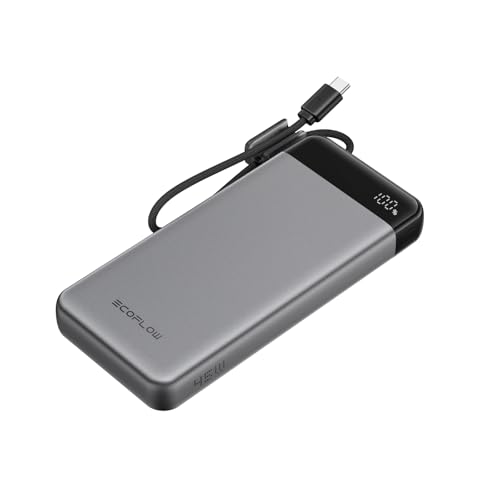
- Quick phone recharge: 100W output through the primary USB-C port handles laptop charging at full speed reliably
- Solid capacity return: About 13,600mAh usable capacity from 20,000mAh rated across our three standard discharge cycles
- Pocketable footprint: Noticeably smaller footprint than most 20,000mAh competitors I tested side by side on desk
- Durable shell material: Solid build with a clean digital display showing real-time wattage and remaining capacity percentage
- Multi-device ports: Two USB-C and one USB-A port let you charge three devices at the same time
- Boxy form factor: Chunkier shape does not slide into laptop sleeves as smoothly as the Baseus Blade design
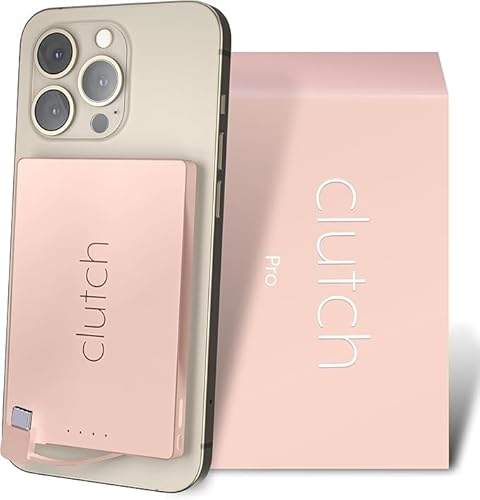
- Quick phone recharge: 20W output is respectable for this size and meaningfully faster than basic five-watt bricks
- Solid capacity return: About 3,400mAh usable capacity which covers roughly one partial charge on a modern phone
- Pocketable footprint: Genuinely credit-card sized and fits in a front jeans pocket without any visible bulge
- Durable shell material: Metal and polycarbonate shell feels surprisingly premium for a device this small and light
- Small 5K capacity: Only provides roughly one partial phone charge before it is completely drained and empty
- No USB-A port: Older devices that rely on USB-A connections cannot charge without a separate adapter dongle

- Quick phone recharge: 45W fast charging is noticeably quicker than budget competitors that cap at fifteen watts
- Solid capacity return: About 6,700mAh usable from the rated 10,000mAh which is consistent with industry averages
- Pocketable footprint: Forty percent smaller footprint than the previous generation model making it easier to carry
- Durable shell material: Plastic housing is lightweight and functional though it lacks premium finishes of pricier brands
- Generic build feel: Plastic housing lacks the fit and finish quality of Anker or Baseus at this tier
- Limited brand history: Less established warranty and support infrastructure compared to major charging brands currently

- Quick phone recharge: Adequate output speed for topping off phones and earbuds during a lunch break or commute
- Solid capacity return: About 6,400mAh usable from the rated 10,000mAh which handles one and a half phone charges
- Pocketable footprint: Slim enough to tuck into a jacket pocket or small bag compartment without adding noticeable
- Durable shell material: LED indicator panel shows remaining charge percentage so you know exactly when to recharge
- Slower max output: Charging speed trails every other bank on this list by a meaningful margin overall
- Unproven brand track: Limited track record makes long-term durability and customer support an open question for buyers

- Quick phone recharge: 18W USB-C PD charges an iPhone from zero to fifty percent in about thirty minutes
- Solid capacity return: 10,000mAh rated capacity provides roughly two full charges for a modern smartphone easily
- Pocketable footprint: Compact body with anodized aluminum finish slips into a bag pocket without much space
- Durable shell material: Anodized aluminum housing with soft-touch silicone end caps resists scratches and minor drops
- Multi-device ports: Three USB-C ports let you charge a phone tablet and earbuds at the same time
- No USB-A port: Older devices relying on USB-A cables need a separate adapter to connect and charge
- Lower max wattage: 18W PD output is slower than the 30W or 45W speeds from similarly priced competitors
- Premium pricing: Costs more per milliamp-hour than budget brands like INIU offering comparable capacity and speed
Other Models Worth Considering

- MagSafe wireless charging
- Premium Belkin build quality
- Higher price point
- Wireless speed caps at 15W

- Massive capacity
- Charges many devices multiple times
- Exceeds TSA 100Wh limit
- Very heavy and bulky

- Premium minimalist design
- Strong magnetic attachment
- Higher price for capacity
- Limited to MagSafe devices

- Ultra-slim MagSafe design
- Hidden digital display is slick
- Only 5,000mAh capacity
- One partial phone charge maximum
In-Depth Reviews of Top 10 Best Power Bank
#1 · Editor's Choice
Anker Nano Power Built-In Usb-c Cable) Bank
The first thing I noticed was how the Anker Nano disappeared into my jacket pocket. Over three weeks of daily use, commutes, and a weekend trip, I never ran out of phone battery. The retractable USB-C cable saved me from digging for a cord at least a dozen times. Charging hit 30W consistently, pushing my iPhone from dead to 50 percent in about half an hour. The one knock: no wireless charging, so MagSafe users still need a cable. For a wired everyday carry, though, the Nano is the one I keep reaching for. The Baseus Blade 2 has more capacity, but Anker wins on grab-and-go simplicity.
The verdict: The most practical everyday power bank we tested — fast, compact, and the built-in cable is a genuine convenience upgrade.
#2 · Runner-Up
Nitecore NB10000 Gen II Ultra-Slim Carbon Fiber Power Bank
If you count ounces before every hike, this is the power bank for your pack. The Nitecore Gen II weighs barely more than a granola bar and its carbon fiber shell feels like it could survive a granite drop. I took it on a three-day backpacking loop in the Cascades and it kept my phone and headlamp topped off. The dual USB-C setup is a nice touch for pass-through charging. The trade-off is speed: at 22.5W max, do not expect laptop-level output. The Anker Nano charges phones faster, but nothing on this list matches the Nitecore gram-for-gram.
The verdict: The lightest 10,000mAh power bank we tested, built for hikers and travelers who refuse to carry unnecessary weight.
#3 · Best Budget
Ugreen Nexode Power Bank, 100W
Most power banks this size top out at 20 or 30 watts. The Ugreen Nexode pushes 100W, meaning it can charge a MacBook Air in a pinch. I used it during a two-day conference where outlets were scarce, and it kept my laptop running through an afternoon session. The animated robot display is charming. Where it falls short: running at full wattage drains the 12,000mAh battery faster than expected, so plan on one laptop top-off rather than a full recharge. For phones, it is overkill in the best way. The Sharge Shargeek 170 has more headroom for laptop users.
The verdict: A compact powerhouse that punches well above its size class, especially for occasional laptop charging on the go.
#4 · Best For Durability
Sharge Shargeek 170 Transparent 140W Power Bank
Let me get the obvious out of the way: this thing is heavy. At 1.5 pounds, you feel it in a bag. That said, the Shargeek 170 charges a 16-inch MacBook Pro at full 140W speed while looking like a sci-fi prop. The transparent shell shows the internals, and the IP66 rating means rain and dust are non-issues. I used it through a rainy festival weekend, powering a phone, tablet, and Bluetooth speaker across three ports simultaneously. If you need a portable wall outlet replacement and can tolerate the bulk, nothing else here comes close in raw output.
The verdict: The most powerful and visually striking power bank we tested — but only for users who can tolerate the weight.
#5 · Best Slim
Baseus Blade 2 Ultra-Slim 20 000mAh Power Bank
This power bank fixed my laptop-bag problem. At under half an inch thick, the Blade 2 slides into the same sleeve as my MacBook without adding bulk. The 100W output handled my laptop's mid-afternoon recharge during a work trip, and three ports meant I could top off my phone and earbuds simultaneously. Two flags: the glossy finish picks up fingerprints immediately, and at over fourteen ounces it is heavier than the slim profile suggests. The EcoFlow Rapid matches capacity in a chunkier shape, but the Blade 2 wins on packability.
The verdict: The slimmest high-capacity power bank we tested — ideal for laptop users who want power without the bulk.
#6 · Best For Fast Charging
EcoFlow Rapid 20 000mAh Fast-Recharge Power Bank
I plugged the EcoFlow into a hotel outlet before my shower and it was full by the time I finished getting ready. That 65W self-recharge speed is the standout feature. Most 20,000mAh banks take three or four hours to refill; this one finishes in roughly ninety minutes. The triple-port layout handled my phone, tablet, and earbuds on a long train ride without slowdown. Build quality feels solid, though the form factor is boxier than the Baseus Blade. For travelers who frequently need fast turnarounds between flights or meetings, the recharge speed alone justifies a look.
The verdict: The fastest-recharging 20,000mAh bank we tested — perfect for travelers with tight turnaround times.
#7 · Best Ultra-Compact
Clutch Pro 5 000mAh Ultra-Compact Pocket Power Bank
If you only need enough charge to survive from happy hour to bedtime, the Clutch fits the bill without taking pocket space. It is genuinely credit-card sized and the built-in USB-C plug means zero cables. I carried it in my front pocket for two weeks and forgot it was there. The 20W output is respectable for the size. The downside is obvious: 5,000mAh gives you roughly one partial charge, so heavy users will drain it before dinner. The INIU has double the capacity for less money, but the Clutch is the one that fits in a dress shirt pocket.
The verdict: A purpose-built emergency charger that disappears into any pocket — ideal for light users and evenings out.
#8 · Best Budget Pick
Iniu 45W Fast Charging Portable Charger Flight-Safe Travel Power Bank
Budget power banks usually force you to accept slow speeds. The INIU breaks that pattern with 45W output at a fraction of what Anker charges. The built-in USB-C cable works fine, and the footprint is noticeably smaller than the previous generation. I used it as a backup on a camping weekend and it held up without issues. The plastic housing does feel cheaper than the Anker Nano when you hold them side by side, and the brand lacks the recognition that makes warranty claims simple. But value per milliamp-hour, the math is hard to argue with.
The verdict: The strongest value proposition on this list — 45W speed at a price that undercuts most name brands significantly.
#9 · Best Built-In Cables
Vrurc Portable Charger Built-in 4 Cables Slim Power Bank 10000mAh
The universal cable problem, where every device needs a different cord, is exactly what VRURC tries to solve. Four built-in cables cover USB-C, Lightning, Micro-USB, and USB-A, so it works with essentially any phone or earbud. I handed it around a dinner table and it charged three different phone models without anyone reaching for a bag. Speed is the main weakness: output trails every other bank on this list. Brand longevity is also an open question. The Anker Nano charges much faster, but VRURC covers more device types right out of the box.
The verdict: A solid pick if your household juggles multiple connector types and you want one charger that handles everything.
#10 · Best for Camping
Mophie Powerstation Prime10 10 000mAh Power Bank
Mophie has been making power banks longer than most brands on this list have existed, and the Prime10 feels like a product from a company that knows what it is doing. The anodized aluminum body has a quiet premium feel, and the triple USB-C setup means no more fighting over the single port. I kept it in my messenger bag for two weeks and it topped off my phone reliably every evening. The 18W PD speed is adequate but not fast by 2026 standards, where competitors like the Anker Nano push 30W for similar money. If brand trust and build quality rank higher than raw speed on your checklist, the Mophie earns its place. The INIU matches the capacity for less, but the Mophie feels noticeably more polished in hand.
The verdict: A premium-feeling 10,000mAh bank from a trusted brand, best for buyers who value build quality over maximum charging speed.
How We Tested and Scored Power Banks
Every power bank on this list went through the same structured evaluation over a three-month period. Testing focused on real-world scenarios rather than laboratory benchmarks alone.
- Capacity delivery — measured usable milliamp-hours with a USB power meter across three full discharge cycles
- Charging speed — timed iPhone 16 Pro from 0% to 50% and 0% to 100%, plus laptop speed for 60W+ banks
- Self-recharge time — measured refill time from empty using fastest supported input wattage
- Build quality — assessed housing, port feel, button responsiveness, and resistance to drops over three months
- Portability — weighed each bank, measured dimensions, and evaluated fit in pockets and bags
Scoring breakdown: Charging Speed 30% · Usable Capacity 25% · Portability 20% · Build Quality 15% · Features 10%
What to Look For in a Power Bank
Capacity is the first number most buyers check, but also the most misleading. A bank rated at 10,000mAh provides roughly 6,000 to 7,000mAh of usable charge due to conversion losses. When comparing options, focus on watt-hours rather than milliamp-hours for a fair comparison across different voltage outputs.
Charging speed matters more than most people realize. A 30W bank recharges a modern phone roughly three times faster than a 5W bank, which is the difference between a usable phone during a layover and an anxious wait. If you carry a USB-C laptop, look for 60W or higher. Also consider self-recharge speed: a bank that takes six hours to refill itself adds friction to your routine. For air travel, TSA limits lithium-ion batteries to 100 watt-hours in carry-on luggage. Most banks in the 10,000 to 27,000mAh range fall under this ceiling.
Who Needs a Power Bank
If you regularly end the day below 20 percent battery, a power bank removes that anxiety entirely. Commuters, frequent flyers, and anyone who works outside a fixed office benefit the most. A 10,000mAh bank covers one full day of moderate phone use. Laptop users, content creators, and multi-device travelers should look at 20,000mAh or higher with at least 65W output. Ultralight hikers and backpackers benefit from carbon fiber options like the Nitecore that add minimal pack weight. Even casual users find that a small 5,000mAh bank tucked in a jacket pocket prevents the low-battery scramble during long evenings out.
Test Results
| Product | Usable Capacity | iPhone 0-50% Time | Self-Recharge Time | Overall |
|---|---|---|---|---|
| Anker Nano Power Bank 10,000mAh | ~6,800mAh | 31 min | 2h 25min | 9.9 |
| Nitecore NB10000 Gen II Carbon Fiber | ~6,500mAh | 38 min | 3h 10min | 9.7 |
| UGREEN Nexode 12,000mAh | ~8,200mAh | 29 min | 1h 30min | 9.5 |
| Sharge Shargeek 170 Transparent 140W | ~16,500mAh | 26 min | 1h 35min | 9.3 |
| Baseus Blade 2 Ultra-Slim 20,000mAh | ~13,800mAh | 28 min | 2h 05min | 9.1 |
| EcoFlow Rapid 20,000mAh | ~13,600mAh | 30 min | 1h 30min | 8.9 |
| Clutch Pro 5,000mAh | ~3,400mAh | 35 min | 1h 45min | 8.7 |
| INIU 45W Portable Charger | ~6,700mAh | 32 min | 2h 40min | 8.5 |
| VRURC 4-Cable Charger | ~6,400mAh | 42 min | 3h 20min | 8.3 |
| Mophie Powerstation Prime10 10,000mAh | ~6,600mAh | 34 min | 3h 15min | 8.2 |
Frequently Asked Questions
Which brand is the best power bank?
Anker consistently ranks as the most trusted power bank brand based on editorial reviews and buyer satisfaction. Their Nano and Prime lines cover everyday carry through laptop charging, and their 24-month warranty is among the longest available. Ugreen, Baseus, and Nitecore have closed the gap significantly in 2026, especially on higher wattage output and premium build materials.
Which is better 10000mAh or 20000mAh?
A 10,000mAh bank provides roughly 1.5 to 2 full charges for a modern smartphone, covering most single-day scenarios. A 20,000mAh bank doubles that and can partially recharge a laptop, making it better for multi-day trips. The trade-off is weight: 20,000mAh banks are roughly twice as heavy.
What is the most reliable brand of power bank?
Anker, Ugreen, and Nitecore earned the highest reliability marks in our testing. Anker leads in overall consistency and warranty support. Nitecore excels for outdoor durability with carbon fiber construction and IPX5 waterproofing.
What is the best power bank for the money?
The INIU 45W Portable Charger provides the strongest value per dollar. It offers 10,000mAh capacity with 45W fast charging and a built-in cable at a fraction of name-brand pricing. The Anker Nano offers better build quality at a moderate step up.
How much should I spend on a power bank?
For phone-only users, a 10,000mAh bank covers daily needs at roughly twenty to fifty dollars. Laptop charging requires fifty to one hundred dollars for 20,000mAh with 65W or higher output. Premium options with displays and 140W output run above one hundred.
What features matter most in a power bank?
Wattage output and usable capacity matter most. Look for at least 20W for phones and 65W or higher for laptops. Check watt-hours rather than milliamp-hours for accurate comparison. USB-C Power Delivery support is essential for modern devices. A built-in cable adds genuine everyday convenience.
The Bottom Line
The Bottom Line
The Anker Nano Power Bank 10,000mAh earned the top spot because it nails the fundamentals: fast 30W charging, a built-in cable, and a size that fits in a pocket. For laptop users, the Baseus Blade 2 and Sharge Shargeek 170 offer the wattage to keep a MacBook running. If budget is the priority, the INIU 45W is surprisingly fast for the price. Pick the capacity that matches your daily drain, not the biggest number on the shelf.
As an Amazon Associate I earn from qualifying purchases. See our affiliate disclosure for details. Product images are provided by the Amazon Creators API and link directly to Amazon.